2016
The first season
This photograph is from 27 April 2016. The Spectrolab assays in Oruro followed in May and August of the same year. The ovens came first. The laboratory numbers came from what left this shed.
27 APRIL 2016 · THE BEGINNING
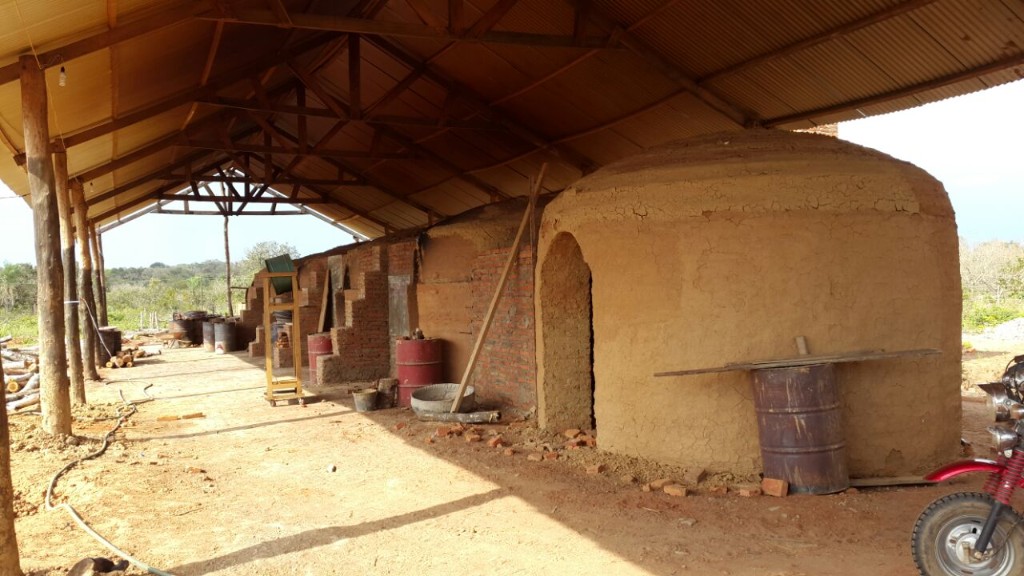
This is the kiln line in April 2016, when the work began. Selected Curupau was not sent to a factory. It was loaded into these adobe and brick ovens, under a shed, and fired. White charcoal starts here — not in a bag of crushed agricultural waste.
THE KILN
The round oven in the photograph is built of earth over brick. The line behind it is the same idea, repeated: a closed chamber, a door, barrels for draft and quench. High-temperature Korean pyrolization was practiced in this yard — slow carbonization of ironwood, then a hard finish, so the log stays whole instead of turning to powder.
2016
This photograph is from 27 April 2016. The Spectrolab assays in Oruro followed in May and August of the same year. The ovens came first. The laboratory numbers came from what left this shed.
LOAD
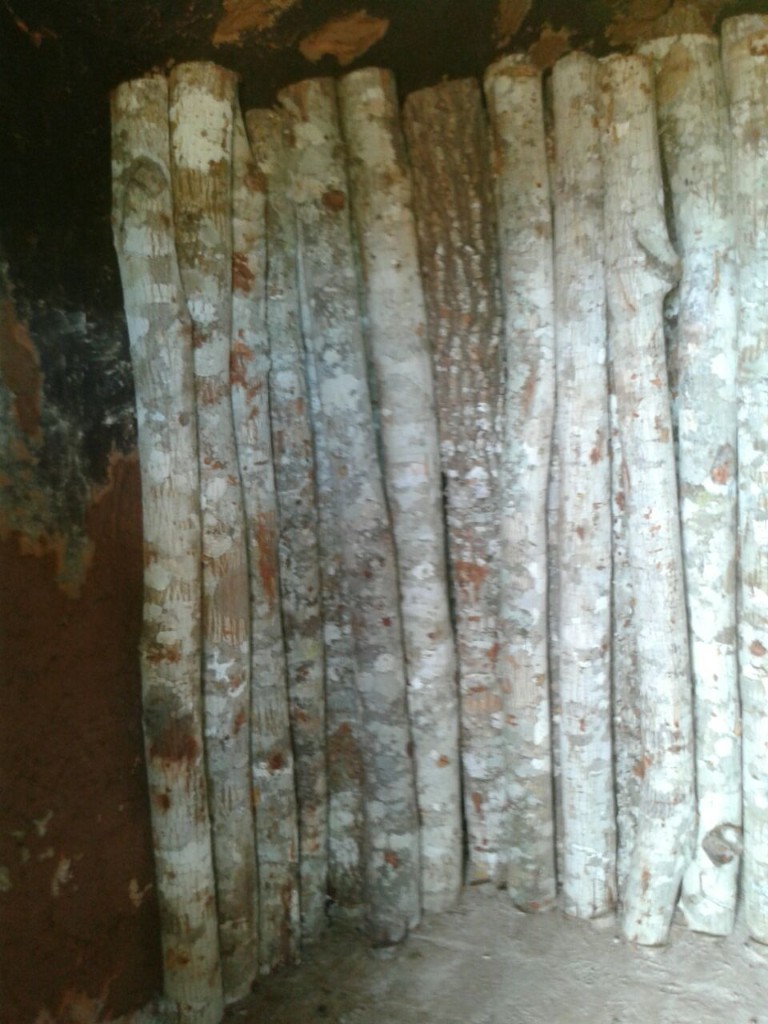
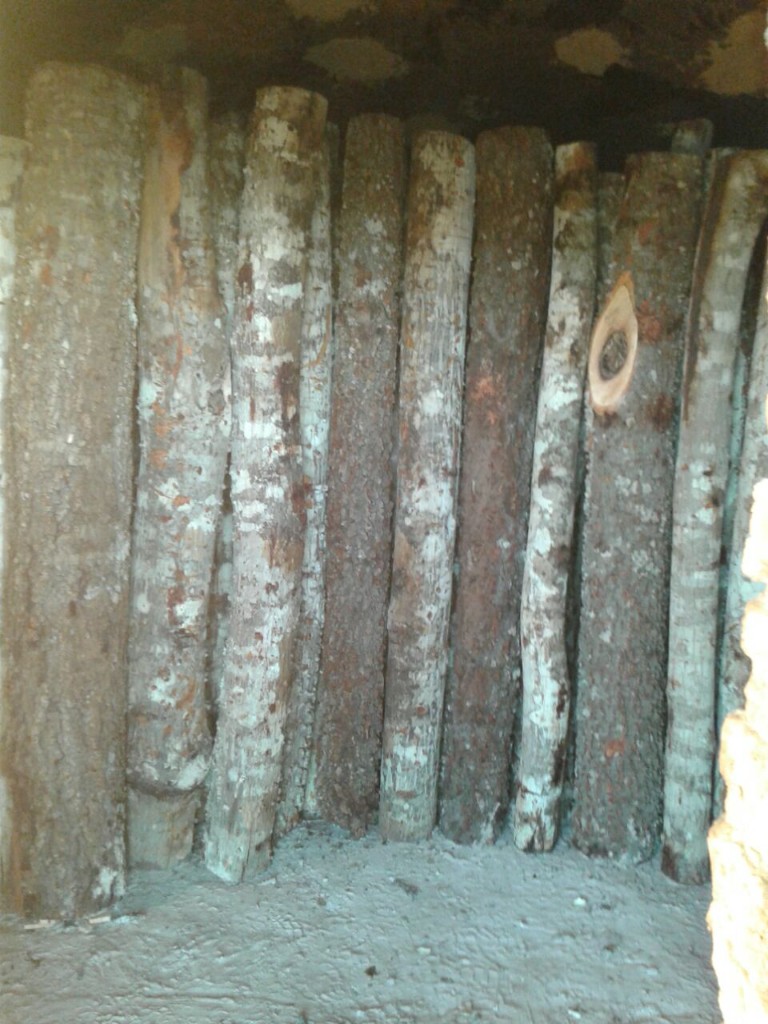
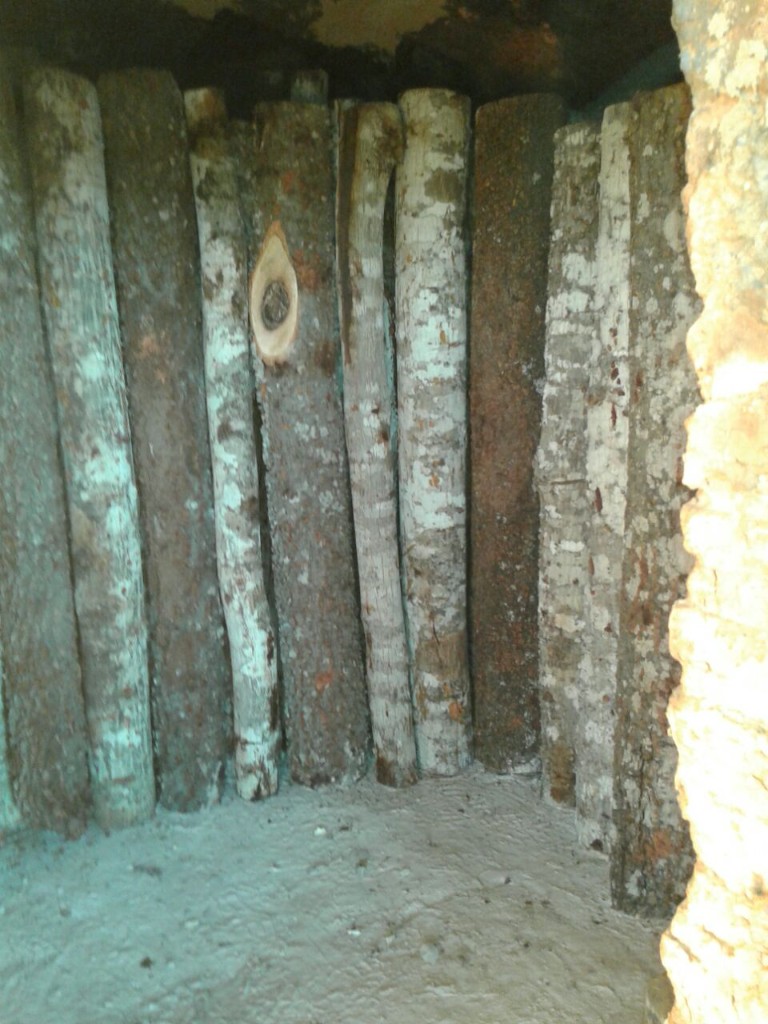
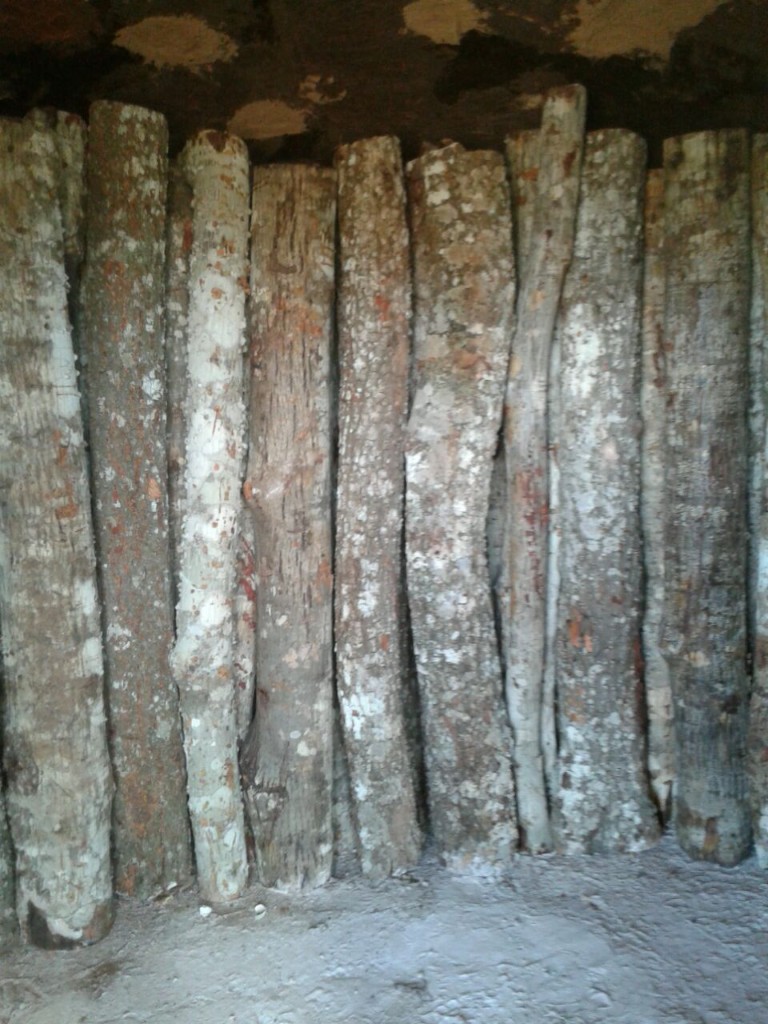
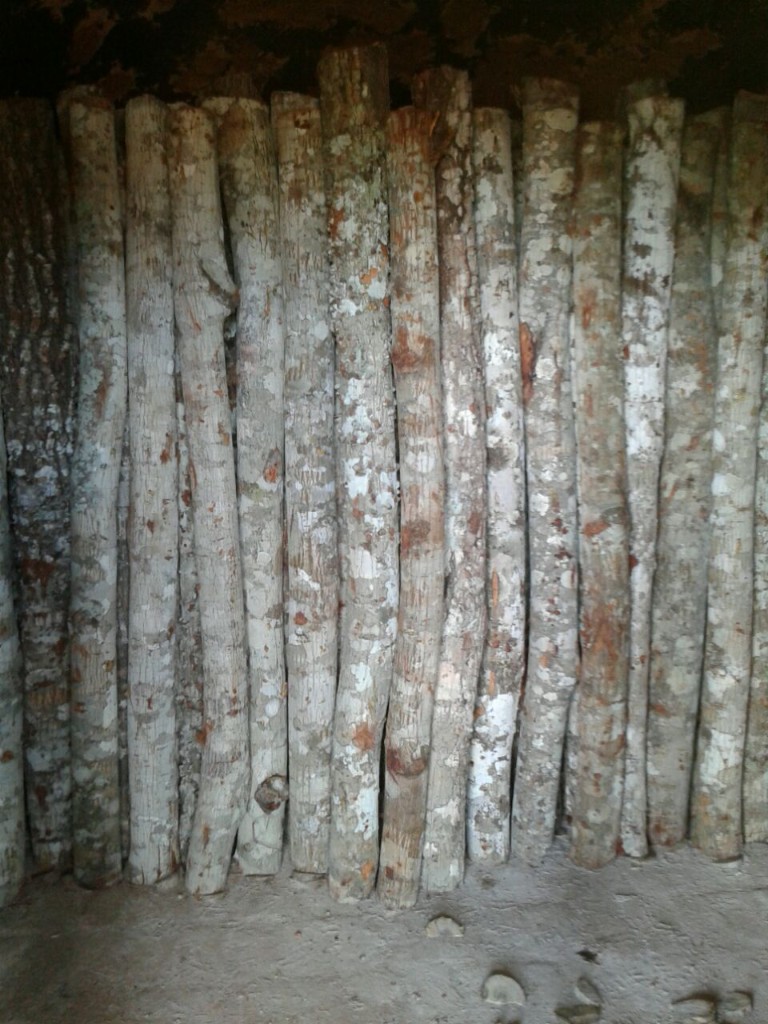
Materia prima — the selected Curupau logs — was cut, then stood upright inside the chamber, bark still on, packed wall to wall. Softwood never belonged in this fire.
FIRE
The kiln is sealed. Temperature rises. Volatile matter leaves. What remains is the carbon matrix: a hard, glassy log. That is why IronMatrix is sold as whole pieces, not dust.
THE MOUTH
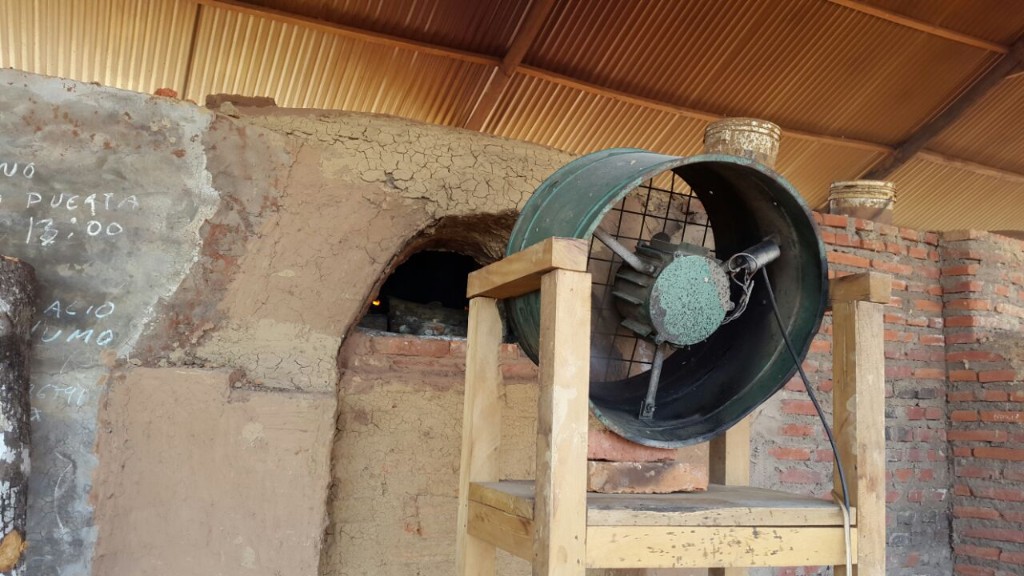
The wall is marked in chalk: puerta, 13:00, humo. A barrel fan sits on a timber frame in front of the arch. Inside, the selected Curupau is already charged — whole logs on end, floor to roof, ready for fire.
THE LINE
April: the ovens. May–August: Spectrolab, Universidad Técnica de Oruro, assays of carbón vegetal from Santa Cruz. The stacked red-heartwood Curupau is the wood that went into these mouths. The 89.73% fixed carbon is what came out.